


Wednesday’s session extended the slow but steady shift that has been building over the past several days: the market is becoming increasingly comfortable with the idea that geopolitical risks, while still present, are unlikely to spiral into a full-scale disruption in the near term.
That shift matters because it directly impacts the dollar’s role in the market.
Earlier in April, any sign of tension in the Middle East triggered immediate dollar buying, driven by both safe-haven demand and inflation fears linked to oil. Now, the reaction is more measured. Traders are no longer treating every headline as a signal to rush into the greenback. Instead, they are evaluating whether risks are actually escalating or simply lingering.
On Apr. 29, the answer leaned toward the latter.
Oil prices remained relatively stable, U.S. yields did not move significantly higher, and there were no major surprises from central banks. In that environment, the dollar struggled to find support and remained soft across most pairs. The move was not aggressive, but it was consistent, reflecting a market that is gradually reducing its defensive positioning.
EUR/USD
Technical Analysis
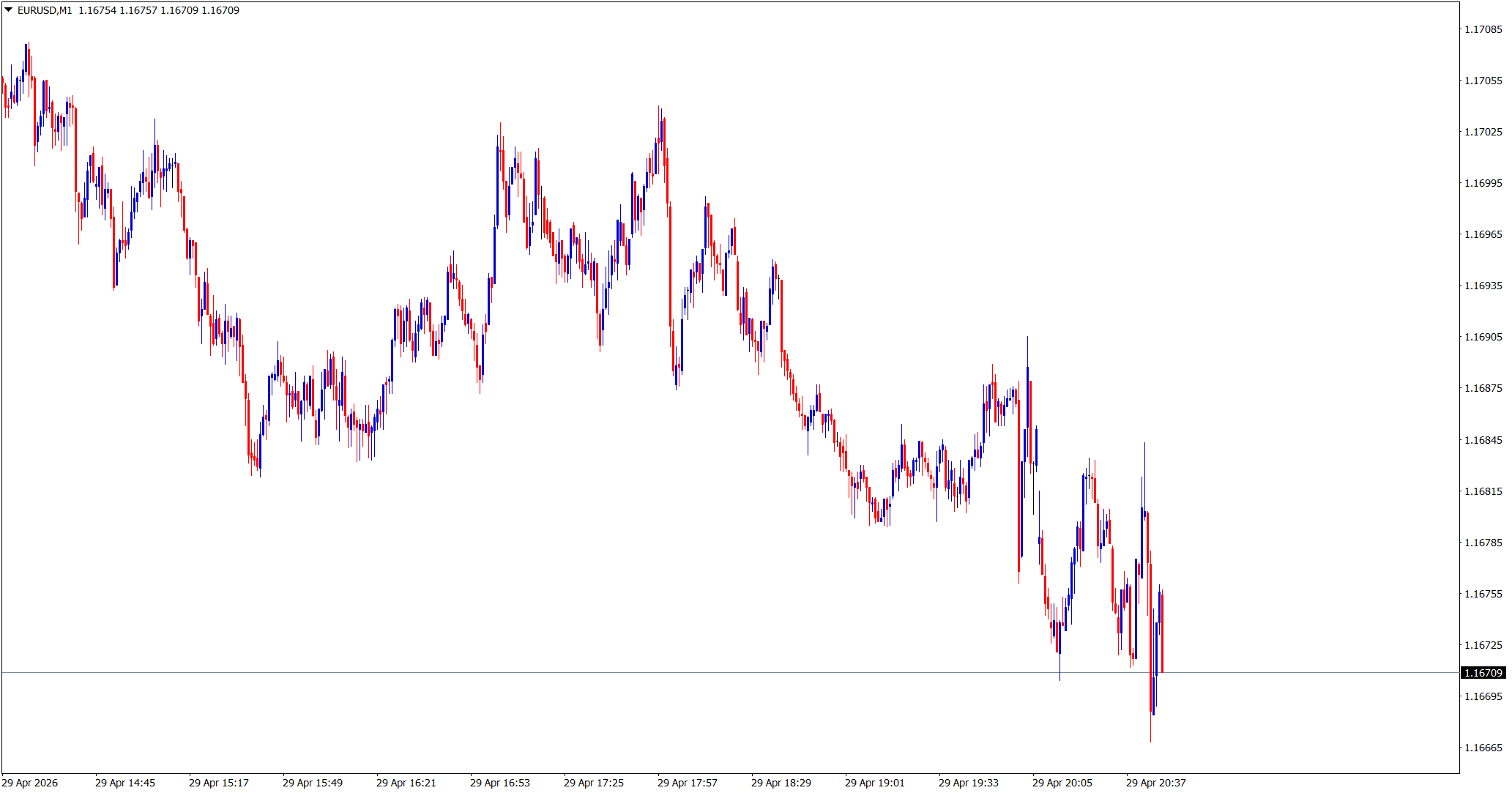
EUR/USD held firm and continued to trade near the upper end of its recent range. The pair did not break out decisively, but it maintained a steady upward bias, showing no signs of meaningful downside pressure.
Technically, this reinforces the idea that the pair is in a consolidation phase with bullish undertones. The lack of retracement suggests that buyers remain in control, even if momentum is not strong enough to drive a breakout.
As long as support levels hold, the structure favors continued stability or gradual upside.
Fundamental Analysis
The euro continues to benefit from the normalization of geopolitical risk. While tensions have not disappeared, they are no longer driving extreme market behavior.
For the eurozone, this is particularly important. Earlier in the month, fears of energy disruption weighed heavily on the currency. Now, with oil prices stabilizing and supply concerns easing, that pressure has diminished.
At the same time, the dollar lacks a strong bullish driver. Without a clear shift in Federal Reserve expectations or a surge in yields, EUR/USD is able to hold its ground and even drift higher.
USD/JPY
Technical Analysis
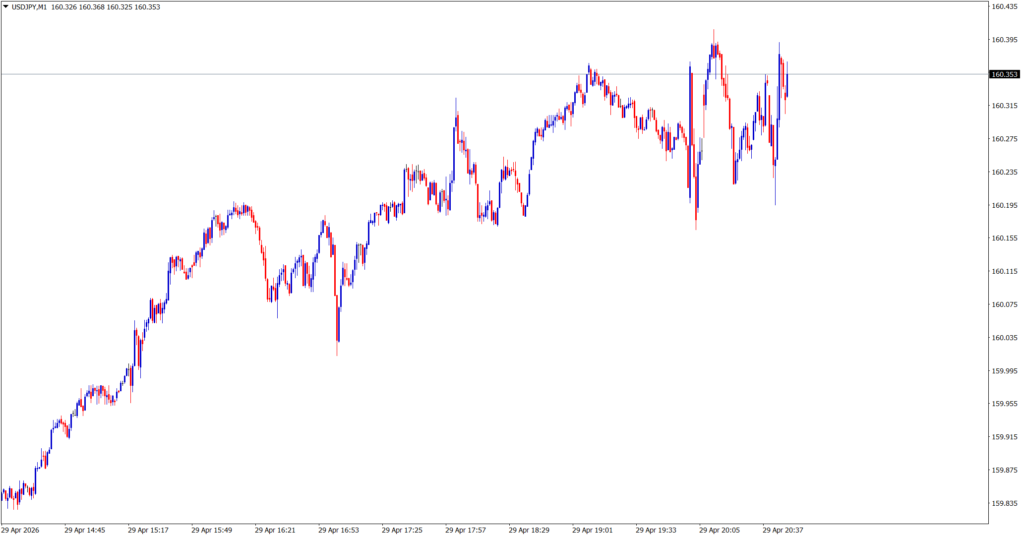
USD/JPY continued to move lower, extending its gradual pullback from recent highs. The decline remained controlled, with no sharp selling, indicating a steady adjustment rather than a panic move.
From a technical perspective, the pair is showing clear signs of waning momentum. Repeated failures to sustain higher levels suggest that resistance is holding, and the pair is transitioning into a corrective phase.
Unless a new catalyst emerges, USD/JPY is likely to remain under pressure in the near term.
Fundamental Analysis
The pair’s weakness reflects a combination of softer dollar demand and stable U.S. yields. With geopolitical fears easing, the need to hold dollars as a safe haven has declined.
The yen, while not strongly bullish on its own, benefits from this shift. Even modest improvements in risk sentiment can lead to yen strength when the dollar weakens.
Additionally, the lack of upward movement in U.S. yields removes a key support factor for USD/JPY, making it more vulnerable to downside moves.
USD/CHF
Technical Analysis
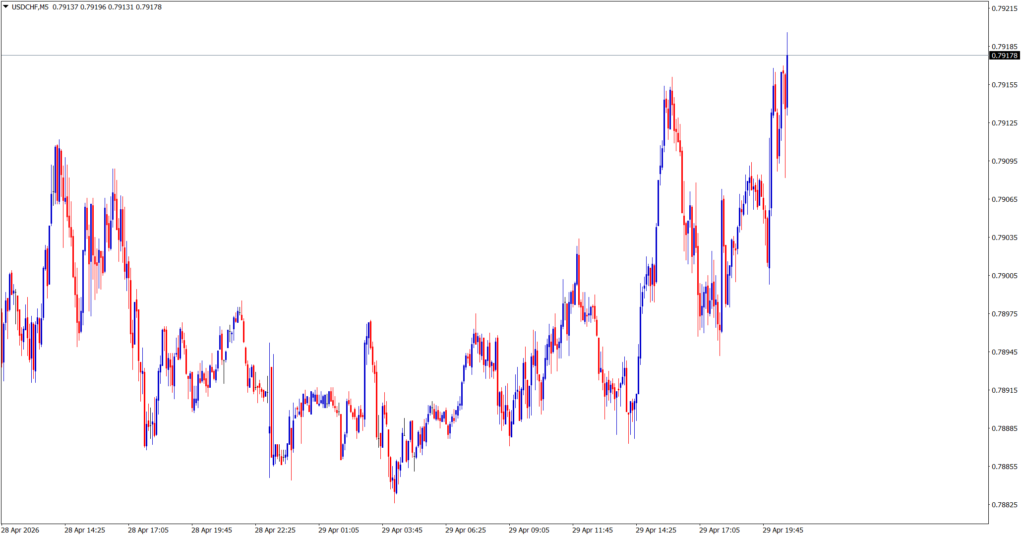
USD/CHF moved lower, reflecting a broader decline in dollar demand. The pair showed a steady downward bias, with limited attempts to rebound.
Technically, this suggests that the pair is losing its earlier support and is now trading in a softer structure. The absence of strong buying interest indicates that the dollar is not being actively accumulated in this environment.
Fundamental Analysis
USD/CHF is particularly sensitive to changes in safe-haven demand, and Apr. 29 clearly showed a shift in that dynamic.
Earlier in the month, the dollar dominated safe-haven flows. Now, those flows are more distributed, and the need for defensive positioning has decreased. As a result, the dollar is losing its advantage against other safe-haven currencies like the Swiss franc.
This reflects a broader change in market sentiment: investors are no longer preparing for immediate escalation, but rather for a more stable, if uncertain, environment.
Market Outlook
Wednesday’s session reinforced the idea that the market is moving away from extreme positioning and toward a more balanced outlook.
The dollar remains under pressure, not because conditions have worsened, but because they have stabilized enough to reduce the need for defensive trades.
As long as:
- geopolitical risks remain contained
- oil prices stay stable
- and central banks maintain a cautious stance
the market is likely to continue trading with a mild anti-dollar bias.
For now:
- EUR/USD remains supported
- USD/JPY continues to drift lower
- USD/CHF reflects fading safe-haven demand
The next major move will depend on whether a new catalyst emerges, either in the form of renewed escalation or a significant shift in monetary policy expectations.
Until then, the market is likely to remain steady, with gradual trends rather than sharp moves.
Discover our other forex market analysis: