


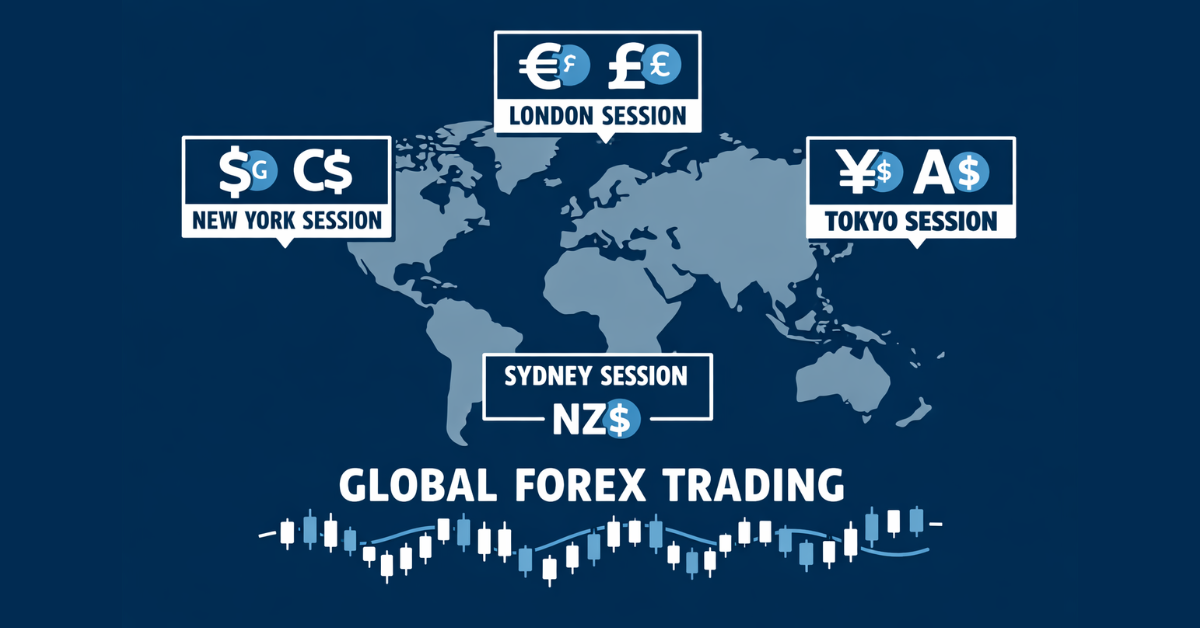
The Asian forex session runs from approximately 7:00 PM to 4:00 AM EST, with the Tokyo market at its core. It is the third-largest forex trading session by volume, following London and New York. During this session, JPY, AUD, and NZD pairs are most active. Volatility is generally lower than London or New York, making it popular with range traders, scalpers, and traders in Asian or Pacific time zones.
Key Takeaways
- Asian session EST time: 7:00 PM to 4:00 AM Eastern Standard Time
- The Tokyo market is the dominant financial center during this session, which is why it is also called the Tokyo session
- JPY, AUD, and NZD pairs are the most active and liquid during Asian trading hours
- Volatility is generally lower than the London or New York sessions, but economic news from Japan, China, or Australia can cause sudden spikes
- The Sydney-Tokyo overlap (7:00–10:00 PM EST) can produce moderate early-session activity before Tokyo fully takes over
- After the Asian session ends, the London session opens and volatility typically increases significantly
What Is the Asian Forex Session?
The Asian session is one of the four major forex trading sessions that make up the 24-hour forex market cycle. It follows the Sydney session and runs before the London session opens, serving as the bridge between the US trading day ending and the new European trading day beginning.
Although the session spans multiple Asian economies including Singapore, Hong Kong, mainland China, and South Korea, the Tokyo market is the dominant driver of price activity during this window. This is why traders and analysts often use “Tokyo session” and “Asian session” interchangeably.
The Asian session is important for more reasons than just its time slot. Many significant economic releases from Japan, Australia, New Zealand, and China are scheduled during these hours, and the price behavior established during the Asian session often sets the tone for later sessions.
Asian Session EST Hours: Full Breakdown
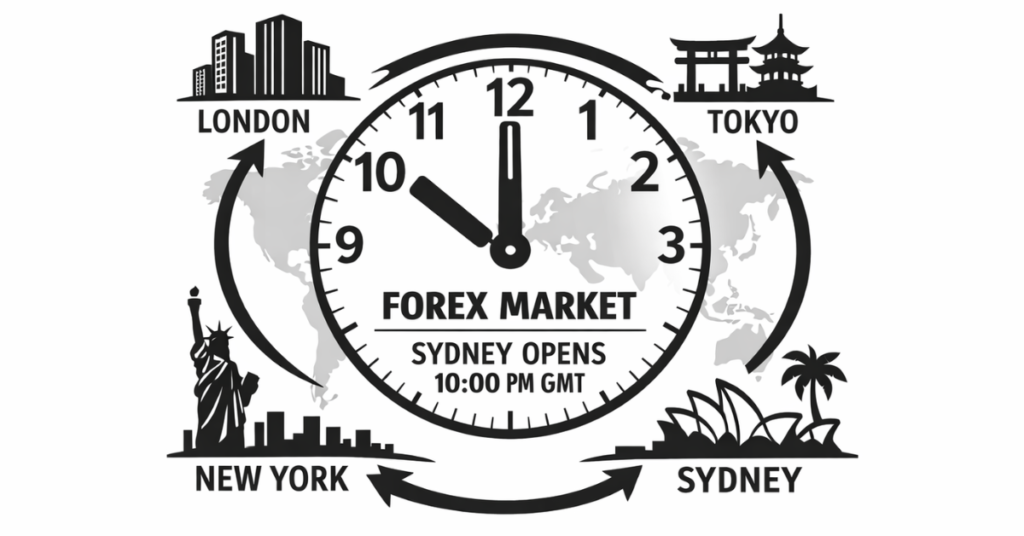
The table below shows all four major sessions in both EST and GMT, along with the key characteristics of each. EST times are for the Standard Time period (November to March). Clocks shift by one hour during daylight saving time.
| Session | EST Time | GMT Time | Key Notes |
| Sydney | 5:00 PM – 2:00 AM | 10:00 PM – 7:00 AM | Quietest session, AUD and NZD pairs active |
| Tokyo (Asian) | 7:00 PM – 4:00 AM | 12:00 AM – 9:00 AM | JPY and AUD pairs most active; moderate volatility |
| London | 3:00 AM – 12:00 PM | 8:00 AM – 5:00 PM | Highest volatility; EUR, GBP, CHF very active |
| New York | 8:00 AM – 5:00 PM | 1:00 PM – 10:00 PM | USD pairs dominate; London-NY overlap is peak volume |
Why the Asian Session Matters
The Asian session is often underestimated by newer traders who focus exclusively on London and New York hours. But it plays several important roles in the overall market structure.
- Sets the daily range foundation: Price levels established during the Asian session often act as reference points for London and New York traders. Asian session highs and lows are frequently used as breakout levels by European traders when they arrive at their desks.
- Key economic releases: Australia’s RBA interest rate decisions, New Zealand’s RBNZ decisions, Japan’s Tankan surveys, and Chinese PMI data all hit the market during Asian hours. Any of these can trigger significant moves.
- Japanese yen dynamics: Japan’s central bank (Bank of Japan) is one of the world’s largest holders of foreign assets. Shifts in BoJ policy, Japanese trade balance data, and Japanese institutional flows all affect USD/JPY and JPY crosses directly during this session.
- Opportunity for range traders: The lower volatility during the Asian session creates more predictable price ranges, which suits certain trading strategies that struggle in the chaotic conditions of London or New York.
For more context on how different sessions compare, see forex trading sessions in EST and Asian and London session guide.
Best Currency Pairs to Trade During the Asian Session
Choosing the right pair for the Asian session is critical. Trading pairs that have minimal activity during these hours leads to wider spreads, thinner liquidity, and less reliable price movement.
| Pair | Trade at Defcofx | Why It Moves | Best Timing |
| USD/JPY | Trade now | Yen is Japan’s currency, most active during Tokyo hours | All session |
| AUD/USD | Trade now | Australian market opens within the session; RBA decisions impact | All session |
| AUD/JPY | Trade now | Active in both Australian and Japanese market hours | All session |
| NZD/USD | Trade now | NZ market hours overlap with early Asian session | Early session |
| NZD/JPY | Trade now | Combines NZD activity with yen dynamics | Early-mid |
| EUR/JPY | Trade now | Yen movement creates good setups even on European crosses | Mid-session |
| GBP/JPY | Trade now | Very active during Asian session due to JPY influence | Mid-session |
For dedicated pair timing guides, see best time to trade USD/JPY, best time to trade AUD/USD, and best time to trade NZD/USD. For a comprehensive Tokyo session pair list, see best currency pairs to trade during Tokyo session and Tokyo session forex pairs.
How Volatile Is the Asian Session?
Compared to London and New York, the Asian session is considerably calmer in terms of average pip ranges on major pairs. This is largely because the session lacks the same concentration of institutional capital flows that European and North American banks generate.
However, “lower volatility” does not mean “no volatility.” JPY pairs in particular can move sharply during this session when:
- Bank of Japan makes a policy statement or intervenes in currency markets
- Japanese economic data (GDP, trade balance, industrial production) is released
- Chinese PMI or trade data surprises to the upside or downside
- RBA or RBNZ delivers an unexpected rate decision
- Global risk events during overnight US hours spill into the Asian open
Best Strategies for Asian Session Trading
- Range trading: The most popular strategy for the Asian session. Because prices tend to consolidate during these hours, traders identify clear support and resistance levels and trade between them. The Asian session range itself, the high and low set during the session, is a key reference for the day ahead.
- Opening range breakout (ORB): Some traders wait for the first 15–30 minutes of the Tokyo session to establish a range, then trade a breakout in whichever direction price exits that range first. This can capture the initial directional move of the session. Read more at does ORB strategy work for Asia session.
- Scalping: With stable spreads on JPY and AUD pairs during Asian hours, scalpers look for quick 5–15 pip moves using tight setups. The 1-minute strategy in forex is a common framework used during the quieter Asian session.
- London breakout preparation: Some traders use the Asian session to identify the range being set, then prepare breakout orders to fire when London opens and volume increases. This strategy benefits from the predictable transition between sessions.
- News trading: Traders who focus on Japanese or Australian data releases position around key events like RBA rate decisions, Japanese CPI, or Chinese manufacturing PMI. These setups require fast execution and tight stop losses.
Also see: scalp trading vs swing trading and forex trading sessions in EST ICT trading for more strategic frameworks.
Asian Session vs London and New York
| Feature | Asian Session | London Session | New York Session |
| EST Hours | 7:00 PM – 4:00 AM | 3:00 AM – 12:00 PM | 8:00 AM – 5:00 PM |
| Volatility Level | Lower | Highest | High |
| Most Active Pairs | JPY, AUD, NZD | EUR, GBP, CHF | USD, CAD, JPY |
| Daily Volume Share | Approx 20–21% | Approx 34–36% | Approx 16–17% |
| Best For | Range trading, scalping | Trend and breakout | News trading, trends |
| Avg Daily Range | Smaller | Largest | Moderate-large |
5 Common Mistakes During Asian Session Trading
- Expecting London-level volatility: Applying strategies designed for the London session to the Asian session leads to overtrading and poor setups. Adjust your expectations and strategy to match the conditions
- Trading the wrong pairs: Trading EUR/USD, GBP/USD, or other European pairs during the Asian session typically means wider spreads, thinner liquidity, and less reliable movements
- Ignoring economic calendar: Overlooking scheduled Japanese, Australian, or Chinese data releases during the session can lead to being caught on the wrong side of a sudden spike. Always check the economic calendar before the session starts
- Not accounting for DST: Failing to adjust for daylight saving time differences between the US and Japan (which does not observe DST) leads to confusion about when the session actually starts and ends
- Overtrading low-volume periods: The lowest volume part of the Asian session, typically 10:00 PM to 1:00 AM EST, has the thinnest liquidity and widest spreads. Quality setups are scarce during this window
Trade Asian Session Pairs with Defcofx
Defcofx provides access to all major Asian session pairs through MetaTrader 5 (MT5) with real-time pricing, tight spreads, and fast execution around the clock. Whether you trade USD/JPY, AUD/USD, or NZD/JPY, you have the tools to track the session in real time.
- Spreads from 0.3 pips with no commissions or swap fees, important when trading the tighter ranges of the Asian session
- Up to 1:2000 leverage on forex pairs including all major Asian session instruments
- 40% welcome bonus on first deposits of $1,000 or more. Visit the promotion page
- Trade USD/JPY, AUD/USD, AUD/JPY, NZD/USD, NZD/JPY and more directly from your MT5 account
- Use the economic calendar to track upcoming Asian data releases and prepare your setups in advance
- Multiple account types available, including demo accounts to practice Asian session strategies risk-free
Trade the Asian Session with Defcofx
Access USD/JPY, AUD/USD, NZD/USD, and all major Asian session pairs with tight spreads and fast execution on MT5. Open a demo account and practice during live Asian market hours at zero risk.
Frequently Asked Questions
What time does the Asian forex session open in EST?
The Asian (Tokyo) forex session opens at approximately 7:00 PM EST during Eastern Standard Time. During US daylight saving time (EDT), this shifts to 8:00 PM EDT. See the full schedule at what is the opening bell for the Asian session in EST.
What time does the Asian session close in EST?
The Asian session typically closes around 4:00 AM EST (5:00 AM EDT during daylight saving time), when the London session begins to gain full momentum. There is often a brief low-volume transition period between the two sessions.
Is the Asian session good for beginners?
Yes. Many beginners prefer the Asian session because volatility is generally lower and price movements tend to be more controlled and range-bound compared to London or New York. This makes it easier to practice entries and exits without extreme speed or chaos. Always use a stop loss regardless of which session you trade.
Which pairs move the most during the Asian session?
USD/JPY and AUD/USD are consistently the most active during Asian hours. AUD/JPY, NZD/USD, and NZD/JPY also perform well during this session. For a comprehensive list, see best currency pairs to trade during Tokyo session.
Is the Asian session less volatile than London?
Yes, significantly. The London session is the most volatile forex session by average daily range. The Asian session has smaller typical ranges on major pairs. However, major Japanese or Australian economic releases can temporarily spike volatility to London-like levels for a short window.
Can you day trade during the Asian session?
Yes. Range trading, scalping, and opening range breakout strategies all work during the Asian session. Focus on JPY and AUD pairs and avoid trying to trade European currencies that have minimal activity during these hours.
Why is Tokyo important in forex trading?
Tokyo is the third-largest forex trading center globally. Japanese banks, exporters, and institutional investors are heavily active in the Tokyo session, particularly in JPY pairs. Bank of Japan policy decisions and Japanese economic data are global market-moving events that originate from this session.
What happens when the Asian session ends?
When the Asian session ends, the London session begins ramping up. Volatility and volume typically increase substantially. The Asian session’s range high and low are often key levels that London traders use as breakout or bounce references. See best currency pairs to trade during London session for what follows.
Does the Asian session overlap with any other session?
Yes. The Sydney session (5:00–10:00 PM EST) overlaps with the early Asian session, creating a moderate boost in activity during that window. The Asian and London sessions briefly overlap around 3:00–4:00 AM EST, when London traders begin increasing activity while Tokyo is still open. See is 5 AM London session or Asian session for clarity on the overlap timing.
Access the Full 24-Hour Forex Market with Defcofx
Trade through every session, Asian, London, or New York, with tight spreads, no commissions, and fast MT5 execution. Start with a free demo account and learn the sessions at your own pace.