


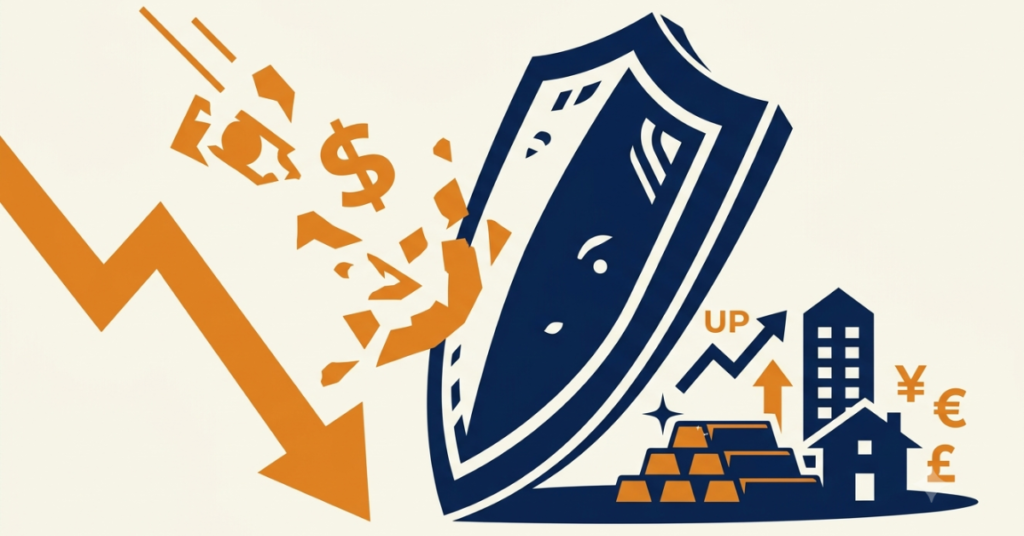
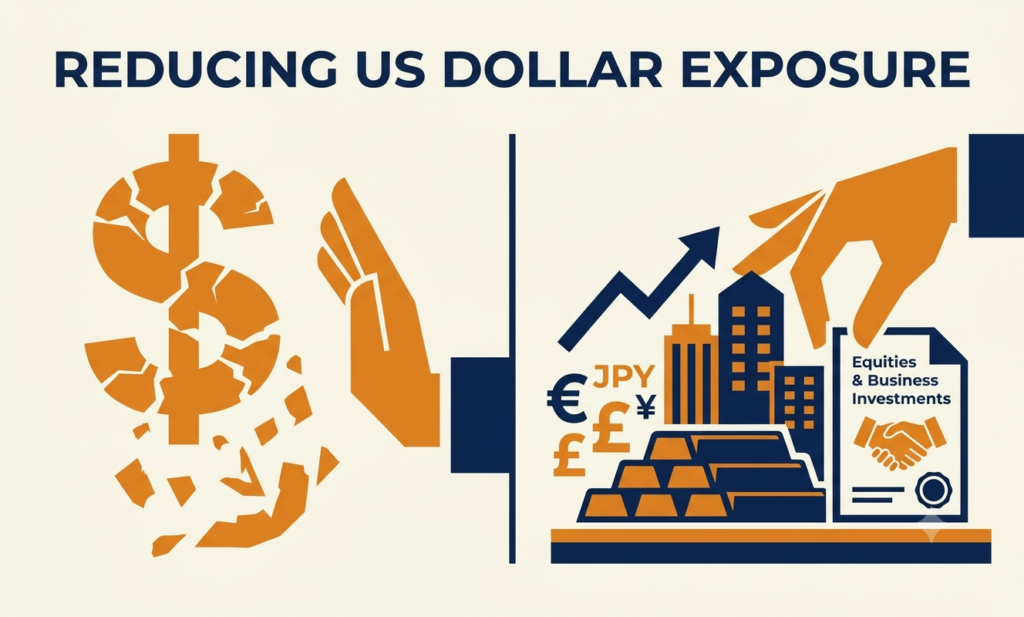
You can protect savings from a weak dollar by diversifying into assets that historically hold value when the dollar falls, including gold, foreign currencies, inflation-protected bonds, real estate, and equities in companies with strong foreign revenue. No single asset offers full protection, so spreading exposure across several of these reduces the risk tied to any one currency.
Key Takeaways
- Diversification across asset types is the single most consistent way to reduce dollar-weakness risk.
- Gold has a historically negative correlation with the dollar, making it a common hedge.
- Avoid concentrating more than roughly 20 to 25 percent of savings in any single asset class.
- Holding a portion of savings in historically stable foreign currencies reduces dollar-specific exposure.
Why the Dollar Weakens and Why It Matters for Savers
The dollar loses value against other currencies when US interest rates fall relative to other countries, when the trade deficit widens, or when confidence in US fiscal policy softens. For savers, this matters because it erodes purchasing power. Cash sitting in a dollar-denominated account can buy less abroad and, if domestic inflation follows, less at home too.
The goal of protecting savings is not to predict every swing in the dollar. It is to hold a mix of assets that do not all move in the same direction at the same time, so a falling dollar does not shrink your entire net worth at once.
Gold and Precious Metals
You can review live gold trading conditions on the Defcofx metals page and check precious metals trading hours before planning entries.
Foreign Currency and Diversified Exposure
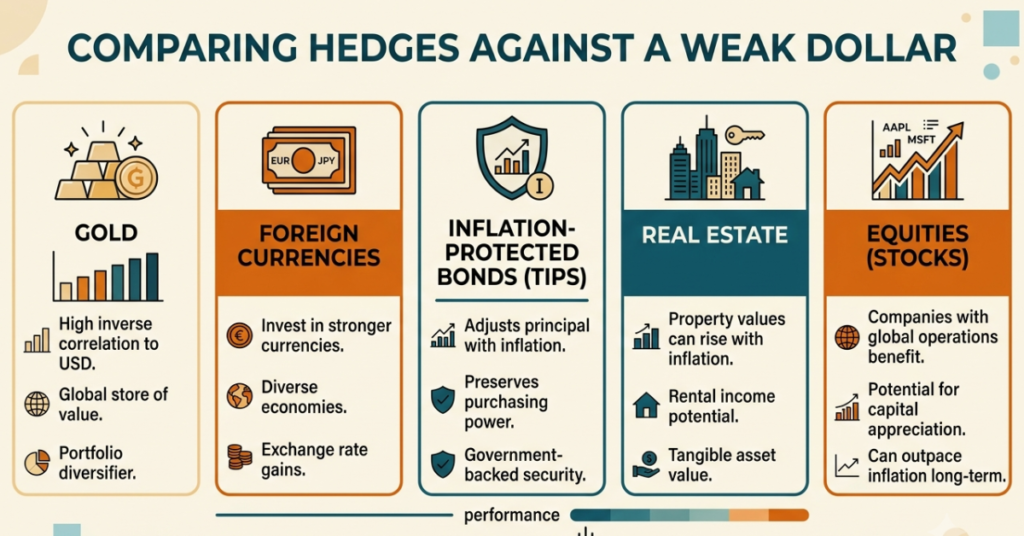
| Approach | How It Helps | Main Risk |
| Foreign currency holdings | Reduces dependence on a single currency | Foreign currency can also weaken |
| Inflation-protected bonds | Principal adjusts with inflation | Lower yield than riskier assets |
| Real estate and REITs | Real assets often outpace currency depreciation | Illiquid, higher entry cost |
| Multinational equities | Foreign revenue benefits from a weak dollar | Equity market risk still applies |
| Commodities (oil, metals) | Priced in dollars, often rise when dollar falls | Price volatility |
Holding a portion of savings in currencies with a long record of stability, such as the Swiss franc, has historically reduced exposure to dollar-specific shocks, this doesn’t need to mean opening foreign bank accounts. Currency trading accounts and currency-focused funds can achieve similar diversification with more flexibility.
Practical Steps for Building a Hedge
Start by reviewing how much of your net worth sits in dollar-denominated cash and dollar-priced assets. From there, most advisors suggest keeping no single asset class above roughly 20 to 25 percent of total holdings, building liquid reserves to cover several months of expenses, and paying down high-interest debt before adding new positions. None of these steps require predicting exactly when or how far the dollar will fall.
Defcofx Features for Diversifying Currency Exposure
| Feature | Defcofx Offering |
| Spreads | From 0.3 pips on major pairs |
| Leverage | Up to 1:2000 |
| Commissions | Zero commissions, zero swap fees |
| Platform | MetaTrader 5 |
| Welcome Bonus | 40% on first deposits of $1,000 or more |
| Withdrawals | Processed within 3 hours, including weekends |
📊 Key Statistics at a Glance
- U.S. Dollar Index (DXY) declined by approximately 10–11% between mid-January and late April 2025, marking one of its sharpest short-term declines on record.
- Gold has historically shown a generally inverse relationship with the U.S. dollar during sustained periods of dollar weakness, although other macroeconomic factors can influence this correlation.
- Financial advisors widely recommend maintaining a diversified portfolio and avoiding excessive concentration in any single asset class. The ideal allocation depends on an investor’s goals, risk tolerance, and investment horizon.
Build Diversified Exposure With Defcofx
Diversifying away from a single currency often means trading, not just saving. Defcofx gives you access to major and minor currency pairs plus gold and other metals on MetaTrader 5, with spreads from 0.3 pips, leverage up to 1:2000, and zero commissions or swap fees. New clients funding an account with $1,000 or more receive a 40% welcome bonus, and withdrawals are processed within 3 hours, weekends included.
Open a Demo Trading AccountFAQs
There is no single best hedge. Gold, foreign currency exposure, inflation-protected bonds, real estate, and multinational equities each offer different protection, and combining them reduces risk more than relying on one alone.
No. Gold pays no yield and can be volatile, so most advisors recommend capping any single asset, including gold, at around 20 to 25 percent of total holdings.
Yes, holding positions in currencies other than the dollar can offset losses if the dollar weakens, though currency trading carries its own risks and leverage should be used carefully.
Not always, but a sustained weak dollar often contributes to inflation by raising the cost of imported goods and raw materials.
Real assets like property have historically outpaced currency depreciation over long periods, though they are illiquid and require significant upfront capital.
There is no fixed rule, but many advisors suggest diversifying gradually and avoiding overconcentration in any one currency, similar to the 20 to 25 percent guideline used for other asset classes.
You can open a free demo account with Defcofx to practice, then move to a live MetaTrader 5 account with spreads from 0.3 pips and leverage up to 1:2000.
Discover More Helpful Forex Guides with Defcofx
- Who Benefits from a Weak U.S. Dollar?
- Which Country Has the Lowest Value of $1?
- How Much Commission Does MetaTrader 5 Take?
- What Is the Weakest Currency?
- Can You Trade US30 on Weekends?
- How to Trade US30
- Best Time to Trade NAS100
- How Many Stocks Are on the Nasdaq?
- What Is the Difference Between Dow Jones and Nasdaq?
- How Much Do I Need to Trade NAS100?