


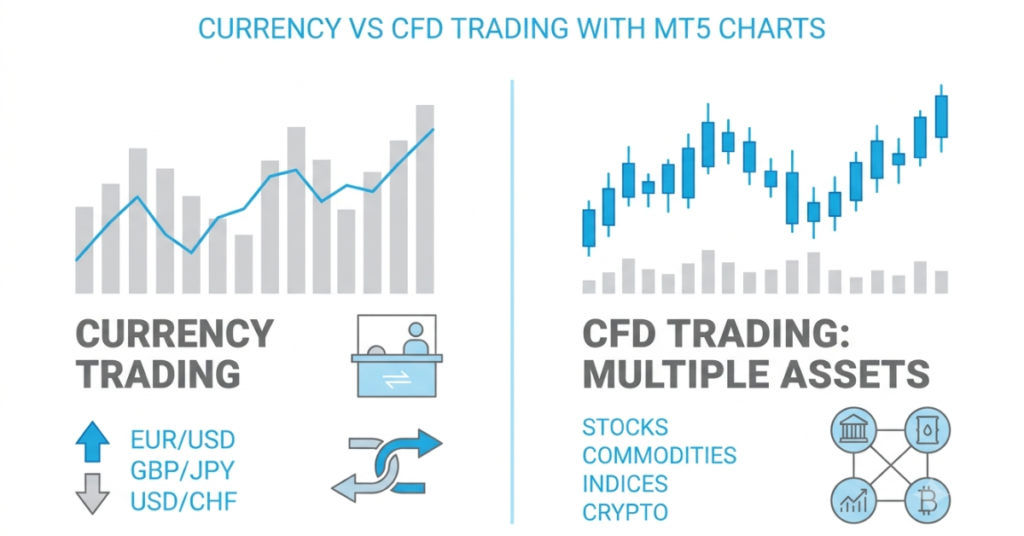
No, a CFD isn’t the same thing as forex. Forex relates to the global market where currencies are bought and sold. A CFD, or contract for difference, is a financial instrument used to speculate on the price of an asset, including currency pairs, without owning it. In practice, most retail forex trading today happens through forex CFDs.
Main Points
- Forex is a market, a CFD is a contract type used to trade within that market and others.
- When you trade a currency pair with most online brokers like Defcofx, you are trading a forex CFD, not the physical currency.
- CFDs also cover metals, indices, crypto, and stocks, forex is just one asset class among several.
- CFD trading lets you go long or short and use leverage, which is why it is popular for currency speculation.
- Understanding the distinction matters for choosing the right account type and managing risk correctly.
Forex and CFD Are Two Different Things
Forex, short for foreign exchange, is the market where one currency is exchanged for another. It is the largest financial market in the world, with trillions of dollars changing hands daily across banks, institutions, and retail traders.
A CFD, or contract for difference, is not a market at all, it is an agreement between a trader and a broker to exchange the price difference of an asset between the time a position opens and the time it closes.
The confusion between the two comes from how retail forex trading actually works. Almost no retail trader takes physical delivery of currency. Instead, brokers offer forex exposure through CFD contracts, which track the price of a currency pair without requiring the trader to hold the actual currency. So while forex is the asset class, CFD is the mechanism most traders use to access it.
How a Forex CFD Actually Works
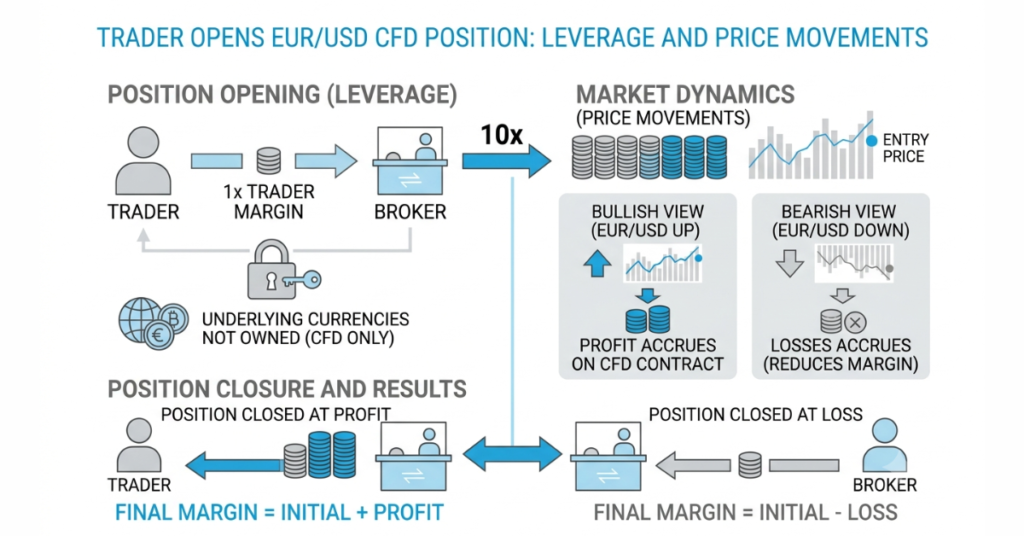
When you open a EUR/USD position on a platform like MetaTrader 5, you aren’t exchanging euros for dollars in the traditional sense. You are opening a CFD contract that mirrors the price movement of that currency pair. If the pair rises and you are long, the broker pays you the difference. If it falls, you pay the difference.
Leverage lets you control a larger position size than your deposited capital, which is why forex CFDs are popular among retail traders looking for capital efficiency.
This structure is what allows brokers like Defcofx to offer tight spreads starting from 0.5 pips and leverage up to 1:2000, without requiring clients to physically hold currency reserves. It also means positions can be opened and closed instantly, which isn’t possible in traditional interbank currency exchange.
Open a Defcofx Demo Trading AccountCFDs Cover More Than Just Forex
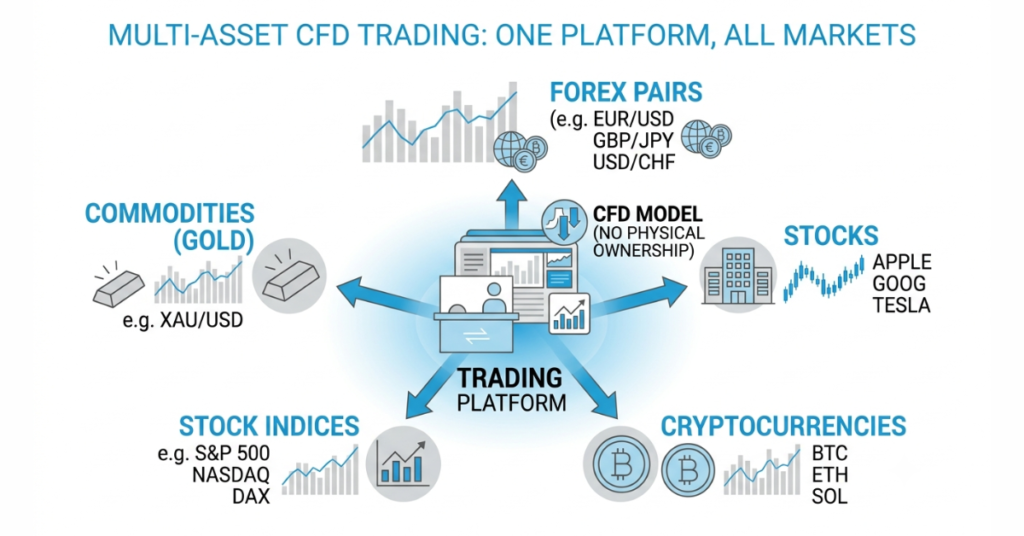
Forex is only one of several asset classes traded through CFDs. The same contract structure applies across commodities, indices, individual stocks, and cryptocurrencies. This is a useful distinction because it explains why a broker offering forex CFDs can also offer gold CFDs or index CFDs through the exact same account and platform.
| Asset Class | Example Instrument | Traded As |
| Forex | EUR/USD, GBP/JPY | Forex CFD |
| Precious Metals | Gold (XAUUSD), Silver | Metal CFD |
| Indices | US30, NAS100 | Index CFD |
| Cryptocurrency | BTC/USD, ETH/USD | Crypto CFD |
| Stocks | Apple, Tesla shares | Stock CFD |
Because the underlying mechanism is the same contract for difference structure, a trader who understands how forex CFDs work can generally apply the same logic to metals or index CFDs, only the underlying asset and its typical volatility profile change.
Why This Distinction Matters for Traders
It’s not just useful to know the difference between forex and CFD; it changes the way you think about risk. Most of the time, a CFD position doesn’t expire, but the broker is exposed to the other side, and based on the instrument, overnight financing may be needed. You can be more realistic about margin calls, leverage, and how quickly a trade can move against you if you know that you are trading a derivative contract instead of directly owning currency.
It also clarifies account selection. Some brokers separate accounts by asset type, but on a platform like Defcofx, forex, metals, indices, crypto, and stock CFDs are all accessible from the same MetaTrader 5 account, so the distinction is mostly about the instrument you choose to trade, not a separate account you need to open.
Defcofx CFD Trading Conditions
As important as the instrument itself are the trading conditions behind the platform. This is true whether you are trading forex CFDs or CFDs on other asset classes.
| Defcofx Feature | Detail |
| Spreads From | 0.5 pips on major instruments |
| Leverage | Up to 1:2000 for eligible accounts |
| Commissions | Zero commissions on trades |
| Swap Fees | Zero swap fees |
| Welcome Bonus | 40% bonus on first deposits of $1,000 or more |
| Withdrawals | Processed within 3 hours |
| Platform | MetaTrader 5 (MT5) |
FAQ
No. Forex is the currency market itself, while a CFD is the contract structure used to trade the price movement of a currency pair, or other assets, without owning the underlying instrument.
Most retail forex brokers offer currency trading through CFDs rather than physical currency exchange, since CFDs allow instant execution, leverage, and the ability to go long or short without holding actual currency.
Physical currency exchange exists outside retail trading platforms, such as at banks or currency exchange counters, but most retail speculative forex trading is conducted through CFD contracts due to their flexibility and lower capital requirements.
CFDs are available on precious metals like gold and silver, stock indices, individual company shares, and cryptocurrencies, all accessible through the same account structure as forex CFDs on platforms like Defcofx.
Since forex trading is typically conducted through CFDs, the risk profile is largely the same. Both involve leverage, which can magnify gains and losses, so risk management applies equally regardless of the terminology used.
The confusion usually comes from marketing language and platform categories that list forex and CFDs separately, even though currency CFDs are simply forex trading delivered through a contract for difference.
Defcofx offers forex trading through CFD contracts on MetaTrader 5, alongside CFDs on metals, indices, crypto, and stocks, all within the same account with spreads from 0.5 pips and leverage up to 1:2000.
Explore More Helpful Forex Guides with Defcofx
- How Can You Protect Your Savings from a Weak Dollar?
- Who Benefits from a Weak U.S. Dollar?
- Which Country Has the Lowest Value of $1?
- How Much Commission Does MetaTrader 5 Take?
- What Is the Weakest Currency?
- Can You Trade US30 on Weekends?
- How to Trade US30
- Best Time to Trade NAS100
- How Many Stocks Are on the Nasdaq?
- What Is the Difference Between Dow Jones and Nasdaq?
- How Much Do I Need to Trade NAS100?